

- Overview
- Trip Outline
- Trip Includes
- Trip Excludes
- Reviews
- Booking
- FAQ
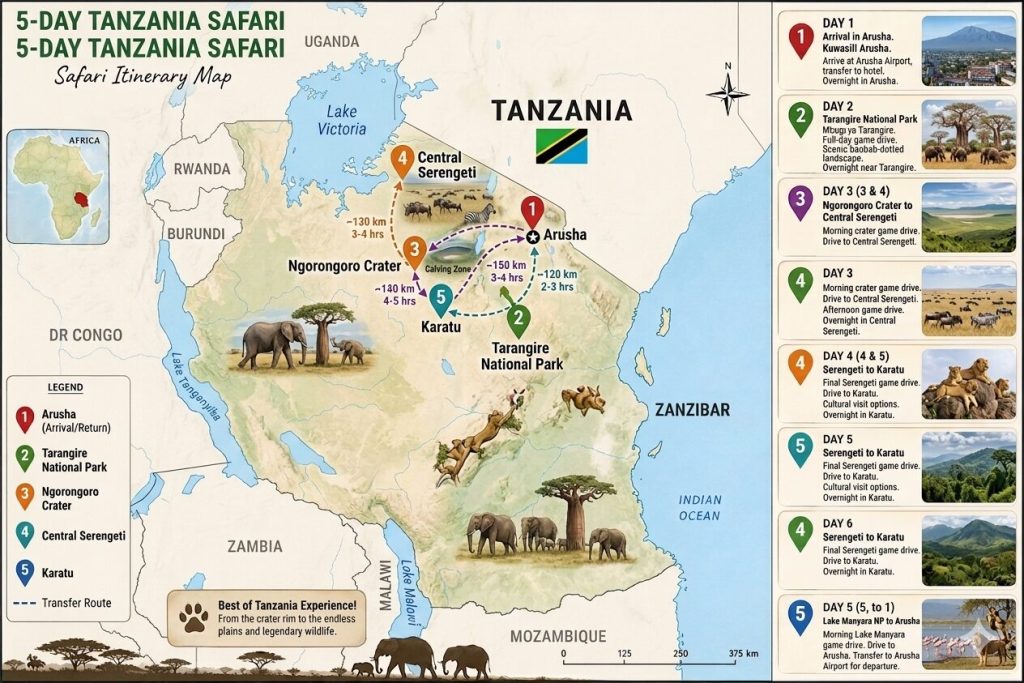 We also visit The Serengeti National Park, home to some 3 million animals. These spectacular grass plains offer the best opportunity of viewing cheetahs, leopards, and lions, in the true wild.
You can also suggest or opt for a Budget Camping Safari Itinerary – And it can be adapted to suit your own needs and preferences, as well as for any seasonal changes or migratory animal movements.
Tour Highlights
- Departure and Return Place: We can start/end this tour from any hotel in Moshi/Arusha or from Kilimanjaro International Airport(Google Map)
- Departure Time: Please be ready by 6:45 AM for a prompt departure at 7:15 AM.
- Return Time: Approximately 4:30 PM.
- Dress Code: Casual. Comfortable athletic clothing, hat, and spare clothing.
- Customizations: Can be amended/customized upon request, to suit your requirements
- Extensions: Trip Extensions are available on request
- Season: The Dry season (from late June to October) offers the best wildlife viewing in general – with the wildebeest migration as its absolute highlight. The migration's timing varies yearly (the best chance of seeing it is during June and July) while the wildebeest calving is from late January to February.
- Your own private guide and driver for in-depth wildlife touring based on your interests
- Firsthand, sophisticated destination knowledge and recommendations from our locally-born travel specialists
- Around-the-clock support from your travel designer and concierge before, during, and after your trip
What to Expect on Tour
- You will experience the excitement of game viewing in some of the most spectacular national wildlife game parks in Africa
- Look out over incredible views of the Ngorongoro Crater
- Witness the annual great migration of a million wildebeest and zebra across the open plains of the Serengeti
Itineraries
Day 1
Arrival in Arusha
You will be picked up from the airport by one of our representatives and conveyed to your accommodation in Arusha where you will overnight, relax, and prepare in anticipation of the adventures to come.
Accommodation
Mid-range: Ilboru Safari Lodge / Arusha Planet Lodge/ Airport Planet Lodge
Budget: Outpost Lodge / Tulia Boutique Hotel / Green Mountain Hotel
Day 2
Tarangire National Park
After breakfast, our safari guide collects us from our lodge for the drive to Tarangire National Park (approximately 2 hours). Tarangire, best known for its elephant families, savannah, iconic baobab trees, and seasonal swamps, is so named for the life-giving Tarangire River. Animals gather at the river and giraffes, bushbuck, and hartebeest, are often seen. The Park is also home to buffalo, zebra, and wildebeest, all of whom are closely attended by a range of predators, Simba the King, and his cousin, the leopard. From the open roof of our state-of-the-art Safari Truck, we will be able to absorb the landscape and watch the wildlife. We enjoy a picnic lunch in the park, which includes a delicious varied repast, coffee, and soft drinks. After a full day soaking up the sights of the park, we drive to accommodation where we take the opportunity to relax, enjoy dinner in aesthetic surroundings, and retire to our well-appointed quarters when the spirit moves us.
Accommodation
Mid-range: Eileen’s Tree Inn / Endoro Lodge / Karatu Simba Lodge
Budget Camping: Lilac Campsite/ Panorama Campsite
Day 3
Ngorongoro Crater to Central Serengeti
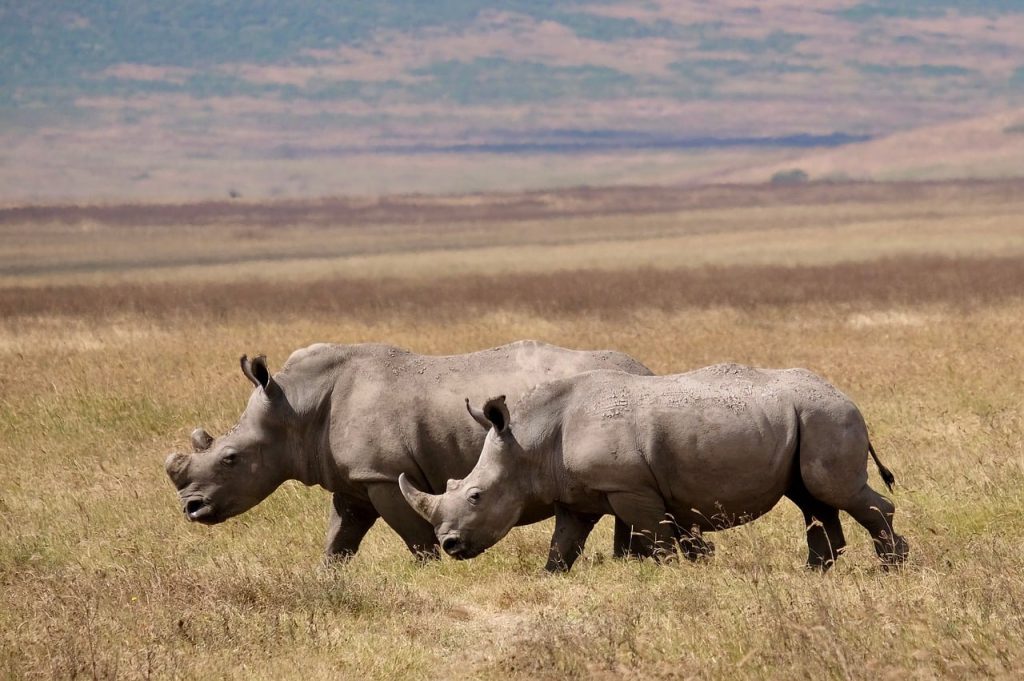
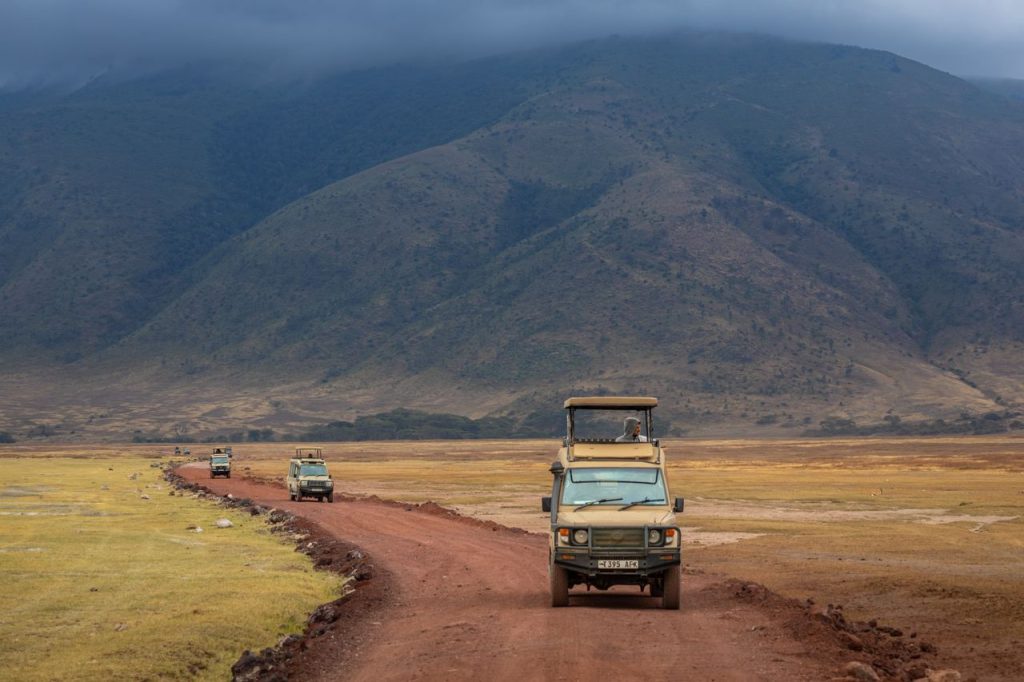
After an early breakfast, we boot up and head out towards the Ngorongoro Crater, the world’s largest volcanic caldera. Almost 20km wide, approximately 600 m deep and known for its large variety of wildlife, the caldera, formed at the explosion of a volcano some three million years ago, was once taller than Kilimanjaro. A self-contained paradise, the caldera hosts an abundance of the finest animal life on the planet. In addition to the Big Five, the various springs attract animals such as wildebeest, gazelle, reedbuck, and more than 500 bird species. At approximately 1400hrs we head towards the Serengeti, arriving at our lodgings in a high-grade tented camp at roughly 6:00 p.m. The Serengeti National Park, the Serengeti, ‘Endless Plain’ in Maa, the tongue of the Maasai is the largest park in Tanzania and home to diverse landscapes and habitats such as grassy plains, swamps, lakes, savannah and mountains and all of the creatures there inhabiting.
Accommodation
Mid-range: Serengeti Heritage Tented Camp / Embalakai Camp / Sound of Silence
Budget Camping: Nyani Campsite
Day 4
Serengeti to Karatu
We will once more enjoy an early breakfast and set off on our game drive at about 6:30 am, spending 6-7 hours exploring this incredible park. The Serengeti is the habitat for an abundance of wildlife, such as impala, buffalo, crocodile and hippo, but is more well-known for its great migrating herds of zebras (two hundred and fifty thousand), wildebeest (one and a half million!), and antelope (half a million). The animals’ trek is determined by the rainfall and varies from year to year. Apart from the migrating herds, we may see predators, such as leopards, cheetahs, and lions, plying their rough trade. At roughly 1400hrs we head back to Karatu for overnight.
Accommodation
Mid-range: Eileen’s Tree Inn / Endoro Lodge / Karatu Simba Lodge
Budget Camping: Lilac Campsite/ Panorama Campsite
Day 5
Lake Manyara National Park to Arusha
After breakfast, we make the short drive to Lake Manyara National Park. Manyara, a relatively small but diverse park 120km west of Arusha, is so named for the shallow salt lake that occupies a good seventy per cent of the park's lands. Flooding and drying seasonally, this soda lake is home to thousands of flamingos and over 500 other bird species. On our exploration of the park, we will see monkeys, giraffes, zebra, wildebeest, buffalo, elephants, and with some luck, lions lounging in the trees. The park is known for its diverse landscapes; not only open grassy plains but also primate-filled woodlands and baobab dotted cliffs.
We return to Arusha after lunch, our adventure having here come to its inevitable close, arriving at roughly 5:00 p.m.
We are. We are not agents for anybody, but run the treks ourselves through our own Tanzanian company. So you can rest assured that whoever you speak to in our company has climbed Kilimanjaro – and probably many times.
They are pretty common. Though sighting one is not a pretty thought. But on safaris atop a vehicle, they are not an issue. While on a walking safari, wear boots when venturing into bushes or woodlands. Use full trousers and long sleeve shirts to protect yourself from mosquitoes and other fly bites. In the bushes, they are a pestilence. Use insect repellent to keep them at bay
Delicious and fulfilling food.For breakfast and lunch. Carry power bars too for that instant energy. On the safari, you will be using a lot of energy. Calories are vital
Vegetarian, vegan, gluten-free, celiac, lactose-free, or if you have any allergies, just give us a heads up and you will be catered to
Any health or medical emergency will be attended to. If the condition requires hospitalization, you will be evacuated to the nearest hospital immediately. Make sure you have the travel and health insurance cover. It’s highly recommended
Tanzania is very near to the equator. So the sun is always at its acme for most of the day. The sun can be fierce and cause sunburns and sunstroke. Wear a hat, shades, and use SPF sunblock lotion
Stay in the vehicle unless you have clearance from the guide to walk or stretch your legs. If you are keen on hiking, there are guided walks that are available in Tarangire, Lake Manyara and Ngorongoro.
The safari trips have public bathroom facilities. In case you have to go and there isn’t one in sight. Relieving behind the vehicle is a good option. of course with the concurrence of your guide. They are sympathetic to nature calls
Tipping is a good courtesy. Tip generously. And always keep their counsel for that optimum and safe safari experience
The opportunity to explore the thriving wildlife of Tanzania in a safari vehicle by going deep into the secluded zones for an up-close and personal experience of Tanzania’s biggest and meanest
Yes. Bear in mind they are wild and unpredictable. The thought restrains you from getting too adventurous on hands-on when you cross paths with a wild animal. Attacks are rare but discretion is a better part of valor. Exercise caution. Remember it’s their territory and you are the intruder.
Related Trips

Arusha National Park Walking Safari
Please login to add your wishlists.Arusha National Park is a great place to experience a walking safari, allowing you to get up close and personal with the wildlife…


There are no reviews yet.