Climbing Mount Kilimanjaro is not only about reaching the summit, but it’s also about the unique experience of sleeping on Africa’s highest mountain. Accommodation on Kilimanjaro comes in two main forms: mountain huts and camping in tents.
Your sleeping arrangement depends on the route you choose, each offering a different level of comfort, privacy, and adventure.
Kilimanjaro Huts (Marangu Route Accommodation)
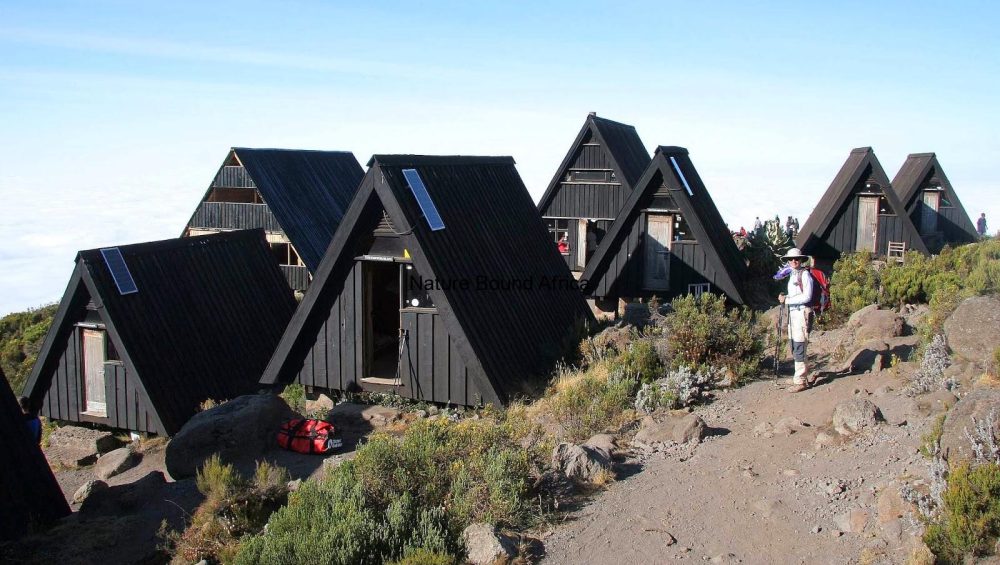
The Marangu Route — often called the “Coca-Cola Route” is the only route on Kilimanjaro that provides permanent hut accommodation.
Main Huts on the Marangu Route
-
Mandara Hut (2,700 m) – Located in the rainforest zone
-
Horombo Hut (3,720 m) – Alpine moorland with wide views
-
Kibo Hut (4,700 m) – Base camp for summit attempt
Inside the huts, you will find:
✔ Dormitory-style bunk beds
✔ Shared dining areas
✔ Solar lighting in some huts
✔ Basic toilet facilities
✔ No heating — temperatures can be very cold
Huts protect from wind and rain, making this route attractive for climbers who prefer not to camp.
Kilimanjaro Camping (All Other Routes)
All other popular routes — including Machame, Lemosho, Rongai, Northern Circuit, and Shira — use fully supported camping.
Your trekking team sets up and dismantles the camp each day.
What to Expect at Campsites
✔ High-quality mountain tents
✔ Sleeping mats provided
✔ Dedicated dining tent
✔ Portable toilets on many premium treks
✔ Incredible sunrise and sunset views
✔ Closer connection to nature
Camping offers a more immersive wilderness experience and often better acclimatization profiles.
Comfort Level: Huts vs Camps
| Feature | Huts (Marangu) | Camps (Other Routes) |
|---|---|---|
| Shelter | Permanent buildings | Mountain tents |
| Privacy | Shared dorms | Small tent groups |
| Weather Protection | Excellent | Very good |
| Facilities | Basic toilets | Portable or public toilets |
| Experience | Less rugged | True adventure feel |
Neither option is luxurious — Kilimanjaro is still a high-altitude expedition.
Dining & Support on the Mountain
Regardless of accommodation type, all guided climbs include a professional support team:
-
Mountain guides
-
Porters
-
Cook and kitchen staff
Hot meals are prepared daily, typically including soup, rice, pasta, vegetables, meat, and tea or coffee.
Hygiene & Facilities
Facilities on Kilimanjaro are basic but functional.
You should expect:
-
Limited or no showers
-
Cold water washing only
-
Shared toilets (long-drop style in many areas)
-
Hand sanitizer essential
-
Wet wipes recommended
Premium operators may provide private toilet tents for added comfort.
Tips for Sleeping Well on Kilimanjaro
✔ Bring a warm 4-season sleeping bag
✔ Use earplugs (huts can be noisy)
✔ Wear thermal layers at night
✔ Keep a headlamp nearby
✔ Stay hydrated but avoid overdrinking before sleep
Quality rest is key to successful acclimatization.
Which Option Is Best for You?
Choose hut accommodation if you:
-
Prefer a solid shelter
-
Want a simpler experience
-
Are concerned about cold or rain
-
Like dorm-style social settings
Choose camping if you:
-
Want a more scenic and adventurous trek
-
Prefer smaller sleeping groups
-
Seek better acclimatization routes
-
Want fewer crowds
Final Thoughts
Accommodation on Kilimanjaro is simple, safe, and designed to support climbers in extreme environments. Whether sleeping in huts or tents, the experience of resting high above the clouds is unforgettable.
With expert planning from Go Ahead Trip, you can focus on enjoying the journey while your team handles the logistics.
Plan Your Kilimanjaro Adventure
Ready to experience life on Africa’s highest mountain? Contact Go Ahead Trip today to choose the best route, accommodation style, and trekking package for your dream climb.