
- Overview
- Trip Outline
- Trip Includes
- Trip Excludes
- Reviews
- Booking
- FAQ
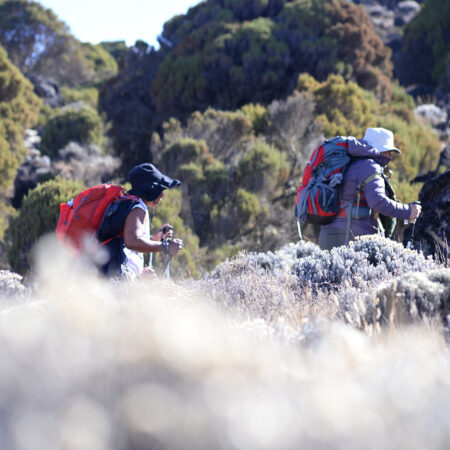
The Lemosho Route 8 Days Kilimanjaro Climb with Daytime Summit is one of the most scenic, safest, and highest-success-rate trekking routes to the top of Africa’s tallest mountain, Mount Kilimanjaro.
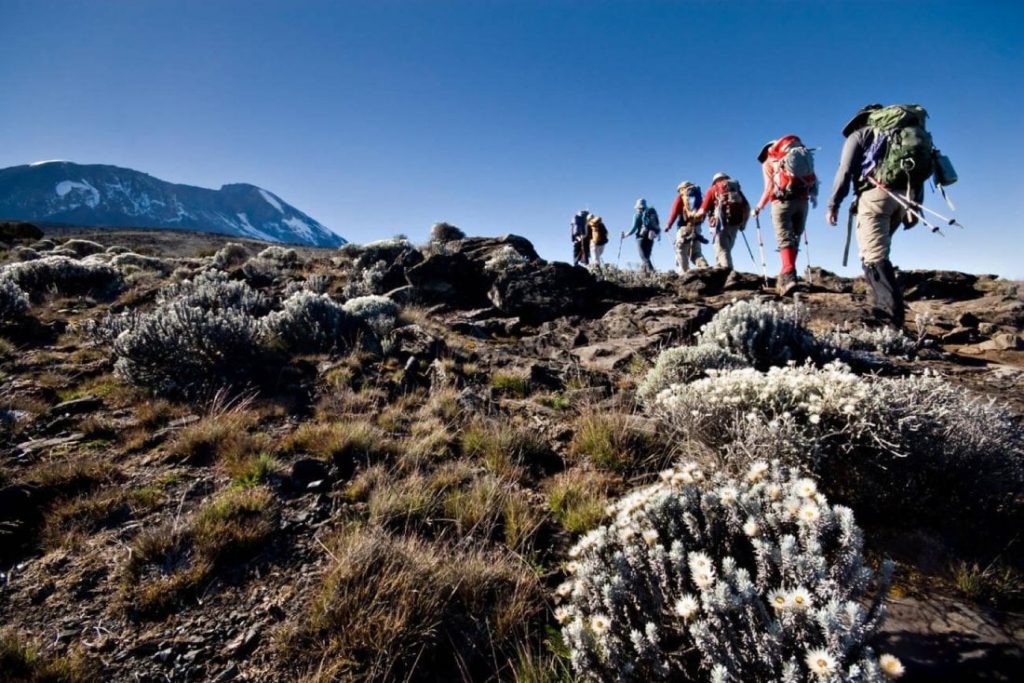
Starting from the western side of Kilimanjaro, the Lemosho Route offers a gradual ascent through lush rainforest, alpine meadows, and dramatic volcanic landscapes before reaching the iconic Uhuru Peak. The longer 8-day itinerary allows excellent acclimatization, significantly increasing summit success rates.
This carefully designed itinerary includes a daytime summit attempt, giving climbers better visibility, improved safety, and a more enjoyable experience compared to the traditional midnight summit push. Trekkers enjoy breathtaking views of glaciers, crater formations, and the vast African plains stretching across Tanzania and Kenya.
With fewer crowds in the early days and exceptional scenery throughout, the Lemosho Route is widely considered the most beautiful Kilimanjaro trekking experience.
Tour Pricing
| Price From | Max People | Min Age |
|---|---|---|
| 15 | 15+ |
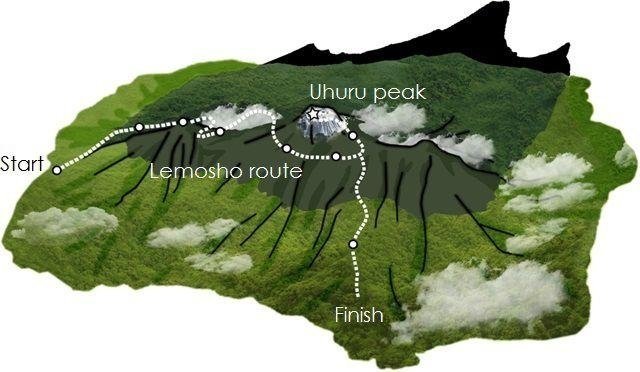 The route is longer than others, allowing climbers to acclimatize properly to the altitude. This extra time will aid in summiting and let you marvel at the surrounding a little longer. It is also among the most scenic routes which do not call for midnight summits. Daytime summits are preferred by most climbers who avoid the crowd at the summit.
Tour Highlights
- Departure and Return Place: Moshi Town to Lemosho Gate and then back to Kilimanjaro International Airport (Google Map)
- Departure Time: Please be ready by 8:15 AM for a prompt departure at 9:30 AM.
- Return Time: Approximately 10:30 AM on the last day.
- Dress Code: Casual. Comfortable athletic clothing, hiking shoes, hat, cold weather jacket, gloves, pants, and spare clothing.
- Accommodation: Two nights of accommodations based on Bed and Breakfast at 3 stars hotel (upgrades on request).
- Extensions: Trip Extensions are available on request.
- Trip Availability: All year round.
Itineraries
Day 1
Arrival
Arrival at Kilimanjaro international airport (JRO), where you will meet an Go Ahead Trip representative, and transfer to the hotel under the rate. The hotel will provide all the essential for a comfortable stay : cozy rooms , hot water , a swimming pool and internet access. In the evening there will be a briefing with our managers, who will also make sure you are ready to begin the climb.
Day 2
Drive To Kilimanjaro National Park Londorossi Gate, Hike To Mti Mkubwa Camp

You will be picked up at your hotel at around 08:00am and transferred to the Lemosho gate located on the western side of Kilimanjaro. After the registration process you will still start our climb steadily through the forests of the Lemosho glades to reach Big Tree camp where you will be spending the night.
- Distance covered: 7km / 4.3mi
- Approx. time taken: 4 hours
- Meals: Breakfast, Lunch & Dinner Included
Day 3
Hike Mti Mkubwa Camp to Shira 2 Camp

Today you will trek across a plateau of grassy moorland and heather scattered with volcanic rock formations. Our destination for today is the Shira 1 Camp from where there are often views of Kibo Peak floating on the clouds. We gain a reasonable amount of altitude today and parts of the route are fairly steep.
- Distance covered: 8.5km / 5.3mi
- Approx. time taken: 7 hrs
- Meals: Breakfast, Lunch & Dinner Included
Day 4
Shira Camp – Moir Camp

Today you will get the chance to view the Northern Ice fields from the western side of the mountain with some unusual views of Kibo. Our steady climb across the moorland of the Shira Plateau will help with acclimatization and we enjoy great panoramic views. Our destination today is the Shira 2 Camp. In the afternoon you will take an acclimatization walk then head back to camp for dinner and overnight.
- Distance covered: 8km / 5mi
- Approx. time taken: 5 hours
- Meals: Breakfast, Lunch & Dinner Included
Day 5
Shira 2 Camp (3900m) to Barranco Camp (3960m)

Your trek starts with an ascent with far-reaching panoramic views, walking in to the climatic zone of the upland desert and on the lava ridges beneath the glaciers of the Western Breach. You will reach the distinct pinnacle of the Lava Tower (4640 m), our high point for the day and a great place to enjoy your lunch. In the afternoon we make a steep descent to our camp for the night, located in the base of the Great Barranco Valley (3960 m), sheltered by towering cliffs but with extensive views of the plains below.
- Distance covered: 10km / 6.2mi
- Approx. time taken: 7 hrs
- Meals: Breakfast, Lunch & Dinner Included
Day 6
Barranco Camp (3960m) to Karanga Camp (3963m)

Our day starts by descending into the start of the Great Barranco, a huge ravine. We then exit steeply, up the Great Barranco Wall, which divides us from the southeastern slopes of Kibo. It’s a climb over rock, not technical but long and tiring. Passing underneath the Heim and Kersten glaciers, we head towards the Karanga valley. From here we have a steep climb up from Karanga valley to our night’s camp at Karanga camp, set at 3963m. For those feeling strong we will go for a mid-afternoon acclimatization trek up to around 4200m before descending back to camp for the night.
- Distance covered: 5.5km / 3.4mi
- Approx. time taken: 5 hours
- Meals: Breakfast, Lunch & Dinner Included
Day 7
Karanga Camp (3963) to Barafu Camp (4640m)

After a good night’s rest and breakfast, we set off on our walk to Barafu camp at 4640m. The climb will take us across desolate scree slopes with no vegetation around us at all. It’s a tough steep walk made more difficult by the altitude. On arriving at camp we eat and spend the afternoon resting as we prepare for a long night and day ahead. It is important to keep hydrated and warm. We have an early dinner and then try to get some sleep as we will be getting up at between 11pm and 12 pm to start the climb to the summit.
- Distance covered: 3km / 1.9mi
- Approx. time taken: 3 hours
- Meals: Breakfast, Lunch & Dinner Included
Day 8
Barafu Camp (4,680 meters) to Uhuru Peak (5,895 meters) and then Mweka Camp (3,100 meters)

You will be awoken around 23:30 with hot tea and biscuits. Hopefully you have managed to get a few hours’ sleep; don’t worry if you haven’t as most people struggle to sleep before summit night. Do however make sure that all your kit, including warm clothes, headlamp, insulated water reserves and snacks are ready for a sharp departure at 24:00. The trek up Kibo is steep and slow. The trick is to keep your momentum moving forward, one step at a time. It takes about 6-8 hours to reach the top of the crater rim where you will see the sign for Stella Point (5,739 meters). You still have another 156 meters of altitude to walk around the crater rim to Uhuru Peak (5,895 meters). After reaching the summit of Kilimanjaro, a 4.5km / 3 mile ascent, you still have an 11km / 7 mile descent to Mweka Camp (3,100 meters)! Mweka is situated in the upper part of the rain-forest zone. The richness of oxygen and moisture in the air will be a very welcome surprise.
- Distance: ~4.5km / 3 miles ascent and then 11km / 7 mile descent
- Trekking time: 6-8 hours to the summit and then 5-8 hours to Mweka
- Zone: Glacial zone and the all preceding zones
Day 9
Mweka Camp (3,100 meters) to Mweka Gate (1,640 meters)

In the morning after breakfast you will be trekking down to Mweka gate. The trek is a pleasant one through the lower rain-forested slopes and down to Mweka Gate (1,640 meters). Although you cover 9km / 5.5 miles, the trek only takes 3-4 hours. Assuming you successfully reach Stella Point or Uhuru Peak you will be presented with official certificates – a green certificate for the former and a gold certificate for the latter. It is customary to tip your trekking crew before being transported back to your hotel in Moshi.
- Distance: ~9km / 5.5 miles
- Trekking time: 3-5 hours
- Zone: Rainforest
Day 10
Departure
Rest in the hotel before the transfer to the airport for your flight home.
We aim to keep the size of the public groups to a minimum, as we feel that a group that is much larger than ten trekkers is cumbersome and trekkers lose the sense that they are in a wilderness if there are too many people. That said, if you are a single, private group, then there is no problem accommodating you whatever the size of the group, as, of course, you will be aware before arriving in Tanzania of the number of people you will be trekking with.
Your Kilimanjaro dream climb is entirely your own to design. We will work with you to customize exactly the triumphant Tanzanian mountainous quest experience you want. You go with the people you choose. You leave on whatever day you wish. You decide on your preferred route option, pace, and the number of days you will take
The mountain is in Tanzania, East Africa, about 350km from the equator. The nearest towns are Moshi and Arusha.
Mount Kilimanjaro is the highest freestanding mountain in the world and the highest mountain in Africa. Its highest point is Uhuru Peak on the Kibo crater at 5895m above sea level.
None, but previous hiking or climbing experience will help. You need to be fit and healthy and have a good pair of worn-in hiking boots. The fitter you are the more you are likely to enjoy it.
There are at least six routes to the top, Uhuru peak. You will hike between 53 and 73km depending on which route you choose. The shortest and toughest is the 5-day Umbwe route. Allowing extra days will help you to acclimatize better and improve your chances of reaching the summit. The easiest and most popular route is Marangu (which can be done in five), but we use six days for this route.
Yes, it is expected and much appreciated. The amount depends on the number of days, but can range from $150 and $300 per hiker. Tips are pooled and shared amongst the crew. Bring US dollar bills.
There are no charging stations on Mount Kilimanjaro. We recommend bringing Power Banks and spare batteries. There are charging ports in our safari vehicles.
We are. We are not agents for anybody, but run the treks ourselves through our own Tanzanian company. So you can rest assured that whoever you speak to in our company has climbed Kilimanjaro – and probably many times.
Vegetarian, vegan, gluten-free, celiac, lactose-free, or if you have any allergies, just give us a heads up and you will be catered to
Your mountain camps are set up and broken down each day by expert camp porters. You’ll stay in double occupancy all-weather tents with full-ground pads to keep you and your gear dry. Private toilet tents, solar-lit dining tents with tables and chairs, and basins of hot water for washing are provided in every camp. Grand Traverse treks include upgraded solar-lit walk-in-height sleeping tents with mountaineering beds and mattresses for additional comfort.
Related Trips

Kilimanjaro Rongai Route 7 Days
Please login to add your wishlists.Conquer Africa’s highest peak on the 7-Day Kilimanjaro Rongai Route. Enjoy a quieter ascent, stunning mountain scenery, excellent acclimatization opportunities, and a rewarding summit experience to Uhuru Peak on Mount Kilimanjaro.


There are no reviews yet.