

- Overview
- Trip Outline
- Trip Includes
- Trip Excludes
- Reviews
- Booking
- FAQ
The Kilimanjaro Machame Route 7 Days with Go Ahead Trip is one of the most popular and scenic ways to climb Mount Kilimanjaro, Africa’s highest peak. Known as the “Whiskey Route,” the Machame Route is famous for its stunning landscapes, varied terrain, and excellent acclimatization profile, making it one of the best choices for a successful summit attempt.
The Kilimanjaro Machame Route 7 Days Go Ahead Trip is designed for adventurous travelers who want a rewarding and visually spectacular trekking experience supported by professional guides, safety systems, and a well-structured itinerary.
Unlike shorter routes, this 7-day version allows better acclimatization, increasing your chances of reaching Uhuru Peak (5,895m), the Roof of Africa.
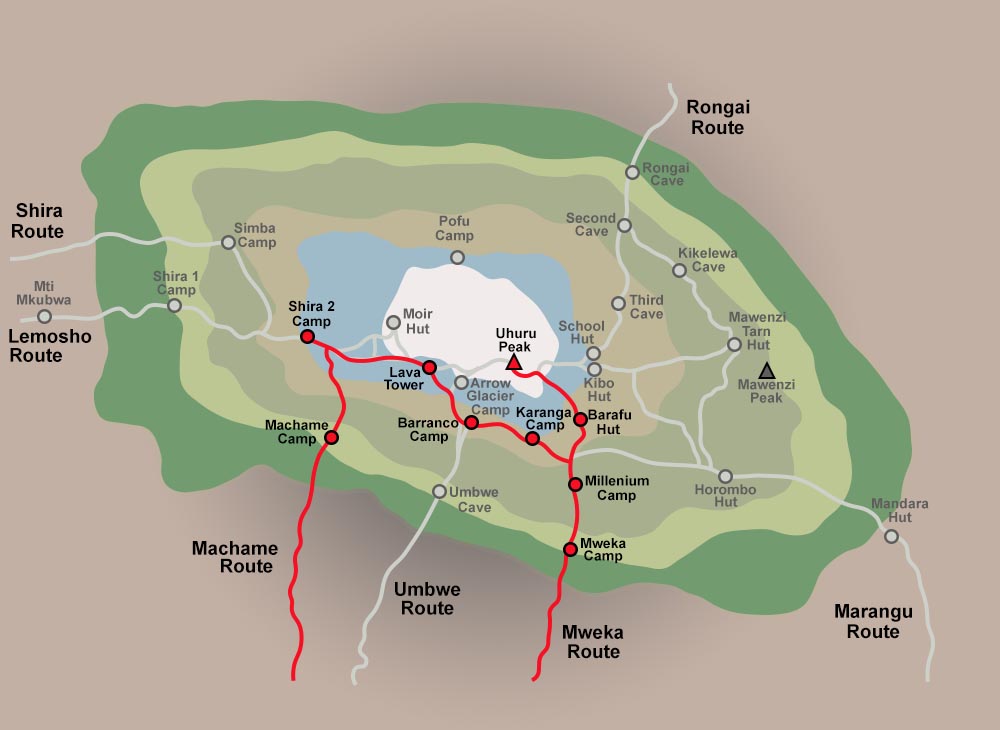
Itineraries
Day 1
Arrival
Arrival at Kilimanjaro international airport (JRO), where you will meet an Go Ahead Trip representative, and transfer to the hotel under the rate. The hotel will provide all the essential for a comfortable stay : cozy rooms , hot water , a swimming pool and internet access. In the evening there will be a briefing with our managers, who will also make sure you are ready to begin the climb.
Day 2
Machame Gate (1490m) – Machame Camp (2980m)
After an early breakfast at your hotel, you will be picked up from Arusha (1400m) and driven to the Machame Village. In the village, you can buy mineral water and will receive a packed lunch. From the village, depending on the road conditions, you will either continue to drive from the village to the Machame gate, but if not, the muddy 3 km walk will take about 1 hour to complete. After registering at the gate office, you start your ascent and enter the rain forest almost immediately. There is a strong possibility of rain in the forest, which will transform the trail into a very soggy, muddy and slippery experience. You will have a welcome lunch stop about half way and will reach the Machame camping area in the late afternoon.
Your porters (arriving at the camp site long before you) will have erected your tent on your arrival. In the evening the porters will boil drinking and washing water and the cook will prepare dinner, before you retire to your tent for the night. Night temperatures can already drop to freezing point at this campsite.
Hiking time: 7 hours
Distance: Approximately 18 kilometers
Habitat: Montane forest
Day 3
Machame Camp (2980m) – Shira Camp (3840m)
After an early morning breakfast, you will start you ascent leaving the rain forest and entering the heathland moorland vegetation. You will cross many streams and walk over a rocky ridge onto the Shira plateau that leads to Shira Camp (3840m). At this campsite, you will be next to a stream and have a spectacular view of the Western Breach and its glaciers in the East. Similar to the first night, your tents will be set up prior to arriving at camp and the porters will prepare drinking and washing water for you. You will enjoy evening snacks then dinner prepared by our chef. Be prepared for a cold night as temperatures drop below freezing at this exposed camp.
Hiking time: 6 hours
Distance: Approximately 9 kilometers
Habitat: Moorland
Day 4
(at 3840m) – Lava Tower (at 4630m) – Barranco camp (at 3950m)
Following an early morning breakfast, you will leave the moorland environment and enter the semi desert and rocky landscape. After 5 hours of walking east, you will be come face to face with the Lava Tower (4630m). Packed lunches are served at the Tower and hikers have the option of climbing the massive Lava Tower weather permitting. At this point of the hike, it is normal for hikers to start feeling the effects from the altitude including headaches and shortness of breath.
After lunch, you will descend from Lava Tower (4630m) to the Barranco Campsite (3950m). The 6800m descent gives hikers a huge advantage to allow their bodies to adjust to the conditions of high altitude. The descent to camp takes around 2 hours to reach. It is located in a valley below the Breach and Great Barranco Wall (“Breakfast Wall”). Drinking and washing water and dinner will be served as hikers view the sun setting.
Hiking time: 7 hours
Distance: Approximately 15 kilometers
Habitat: Semi-desert
Day 5
Barranco Camp (3950m) – Karanga Camp (3950m)
After an early morning breakfast, it is now time to conquer the Great Barranco Wall! Although it may look intimating at first glance, hikers state that this Class 2 hike is usually much easier than they anticipated. At the top of the Wall, you will have a view of Heim Glacier and will be above the clouds. The trail then winds up and down in the Karanga Valley. This is an ideal hiking day for acclimatization.
Hiking time: 4-5 hours
Distance: Approximately 5 kilometers
Habitat: Alpine desert
Day 6
Karanga Camp (3959m) – Barafu Hut (4600m)
Following breakfast, you will leave Karanga Camp (3959m). The trail intersects with the Mweka Route, which is the trail used to descend on the final two days. As you continue hiking for an hour, you will reach Barafu Hut. This is the last water stop for the porters because there is no accessible water at Barafu Camp (4550m). The word “barafu” in Swahili means “ice” and this camp is located on a rocky, exposed ridge. Tents will be exposed to wind and rocks so it is important for hikers to familiarize themselves with the campsite before dark. An early dinner will be served so hikers can rest before attempting the summit the same night. Your guide will brief you in detail on how to prepare for summit night. Get to sleep by 19:00!
Hiking time: 2-3 hours
Distance: Approximately 4 kilometers
Habitat: Alpine desert
Day 7
Summit Attempt - Barafu camp (4600m) – Uhuru Peak (5895m) – Mweka (3100m)
Your guide will wake you around 23:30 for tea and biscuits. You will then begin your summit attempt. The route heads northwest and you will ascend over stone scree. During the ascent, many hikers feel that this is the most mentally and physically challenging part of the climb. In about 6 hours, you will reach Stella Point (5685m), located on the crater rim. After enjoying the magnificent sunrise, you will continue ascending for about 2 hours on a snow-covered trail to Uhuru Peak (5895m). Reaching the summit of Mt. Kilimanjaro is a lifetime accomplishment! You will be able to spend a short time on the summit taking photographs and drinking tea before the descent to Barafu begins. The hike down to Barafu Camp takes about 3 hours.
At camp, you will rest and enjoy a hot lunch in the sun. After eating, you will continue descending down to Mweka Hut (3100m). The Mweka Trail will lead you through the scree and rocks to the moorland and eventually into the rain forest. Mweka Camp (3100m) is located in the upper rain forest, so fog and rain should be expected. You will have dinner, wash, and rest soundly at camp.
Hiking time: 8 hours to reach Uhuru Peak, 7-8 hours to descend to Mweka
Distance: Approximately 7 kilometer ascent and 23 kilometer descent
Habitat: Stone scree and ice-capped summit
Day 8
Mweka camp (3100m) – Mweka Gate (1980m)
Following a well-deserved breakfast, your staff will have a big celebration full of dancing and singing. It is here on the mountain that you will present your tips to the guide, assistant guides, chef(s), and porters. After celebrating, you will descend for three hours back to Mweka Gate. The National Park requires all hikers to sign their names to receive certificates of completion. Hikers who reached Stella Point (5685m) receive green certificates and hikers who reached Uhuru Peak (5895m) receive gold certificates. After receiving certificates, hikers will descend into the Mweka village for 1 hour (3 kilometers). After receiving certificates, you will drive back to your hotel in Moshi.
Hiking time: 3 hours
Distance: Approximately 15 kilometers
Habitat: Forest
Day 9
Departure
Rest in the hotel before the transfer to the airport for your flight home.
- Two way private airport transfers
- All park fees collected by the National Park
- Hotel ccommodations one night before and one night after the expedition
- Tented accommodation on Mount Kilimanjaro
- All meals on the hike
- All group equipment (dining tent, table, chairs, crockery and cutlery)
- Oxygen cylinders and oximeters
- Complete Expedition medical kits
- Professional guides licensed by Kilimanjaro National Park
- Dedicated support crew (assistant guides, camp master, porters, cooks, etc.)
- Government taxes
- Crew salaries
- Medical evacuations with AMREF Flying doctors
- Purified water while on the mountain
- Portable tented private flush toilet
- Personal Climbing gears
- Tanzania Visa on arrival
- Mountaineering Insurance
- Tips and Gratuities
- Personal Expenses (e.g. laundry, telephone, beverages, etc.)
We aim to keep the size of the public groups to a minimum, as we feel that a group that is much larger than ten trekkers is cumbersome and trekkers lose the sense that they are in a wilderness if there are too many people. That said, if you are a single, private group, then there is no problem accommodating you whatever the size of the group, as, of course, you will be aware before arriving in Tanzania of the number of people you will be trekking with.
The mountain is in Tanzania, East Africa, about 350km from the equator. The nearest towns are Moshi and Arusha.
Mount Kilimanjaro is the highest freestanding mountain in the world and the highest mountain in Africa. Its highest point is Uhuru Peak on the Kibo crater at 5895m above sea level.
None, but previous hiking or climbing experience will help. You need to be fit and healthy and have a good pair of worn-in hiking boots. The fitter you are the more you are likely to enjoy it.
There are at least six routes to the top, Uhuru peak. You will hike between 53 and 73km depending on which route you choose. The shortest and toughest is the 5-day Umbwe route. Allowing extra days will help you to acclimatize better and improve your chances of reaching the summit. The easiest and most popular route is Marangu (which can be done in five), but we use six days for this route.
You will eat normal food: potatoes, rice, pasta, vegetables, eggs, sandwiches, cheese, and fruit. When you book a trek, let your tour operator know about food allergies or medical conditions that require special diets. Non-vegetarians will be served sausages, chicken, and meat. Tea, coffee, and hot chocolate will be available as well.
Yes, it is expected and much appreciated. The amount depends on the number of days, but can range from $150 and $300 per hiker. Tips are pooled and shared amongst the crew. Bring US dollar bills.
There are no charging stations on Mount Kilimanjaro. We recommend bringing Power Banks and spare batteries. There are charging ports in our safari vehicles.
We are. We are not agents for anybody, but run the treks ourselves through our own Tanzanian company. So you can rest assured that whoever you speak to in our company has climbed Kilimanjaro – and probably many times.
Prior to the climb, you’ll enjoy an acclimatization day with wildlife viewing and nature walks. Trekking through the rain forest, you’re likely to spot black-and-white Colobus monkeys, tropical birds and more.
Highly-trained chefs prepare three hot nutritious meals daily, as well as trail snacks and afternoon tea each day. You’ll eat all your meals in a solar-lit dining tent with your fellow trekkers and head guide. Delicious vegetarian, vegan, gluten-free and other specialty meals can be provided (with advance request). We’re happy to send you a sample menu—just ask!
Your mountain camps are set up and broken down each day by expert camp porters. You’ll stay in double occupancy all-weather tents with full-ground pads to keep you and your gear dry. Private toilet tents, solar-lit dining tents with tables and chairs, and basins of hot water for washing are provided in every camp. Grand Traverse treks include upgraded solar-lit walk-in-height sleeping tents with mountaineering beds and mattresses for additional comfort.
You will need a passport that is valid at least six months beyond your dates of travel with an entry or re-entry visa, duly endorsed.
Mount Kilimanjaro can be climbed anytime throughout the year. Most travelers prefer climbing during the dry seasons: December to March, June to October. Many consider the best months to climb Kilimanjaro to be January, February, and September.
Related Trips
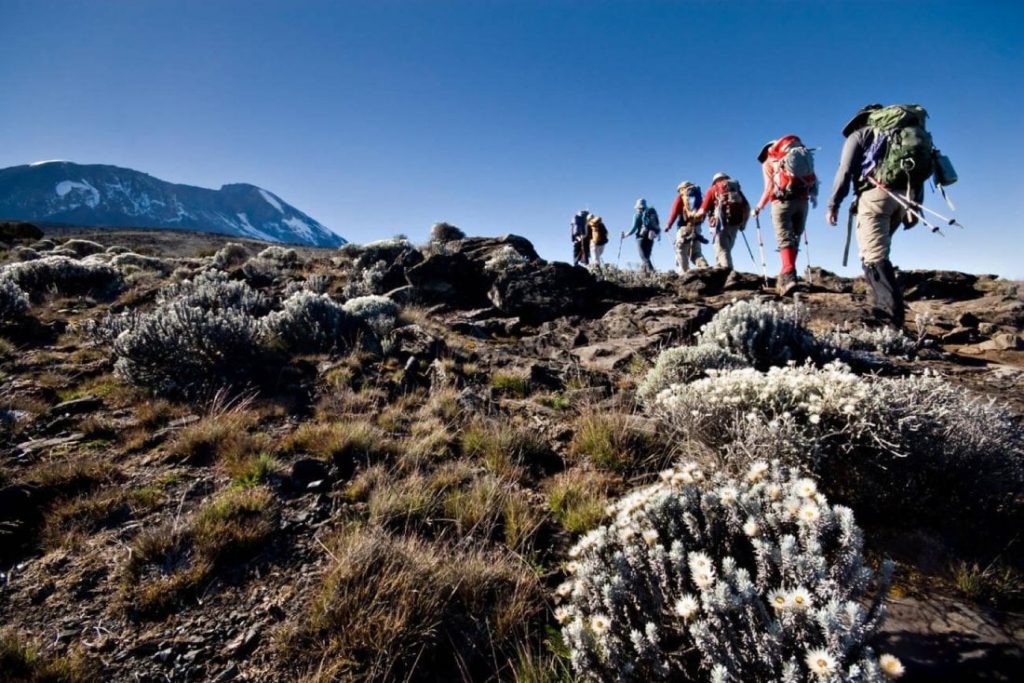

Kilimanjaro Rongai Route 7 Days
Please login to add your wishlists.Conquer Africa’s highest peak on the 7-Day Kilimanjaro Rongai Route. Enjoy a quieter ascent, stunning mountain scenery, excellent acclimatization opportunities, and a rewarding summit experience to Uhuru Peak on Mount Kilimanjaro.


There are no reviews yet.